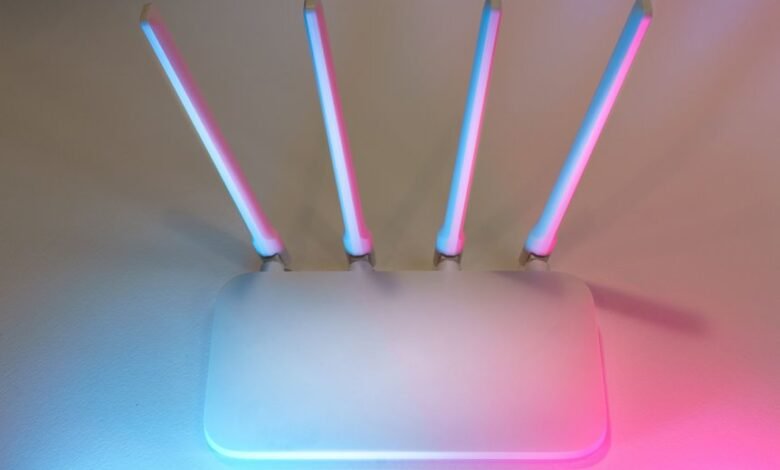
The 168.1.5 Router Login and Network Management Guide presents a precise framework for secure access to the router admin panel and structured network control. It outlines stepwise procedures for connection, credential entry, and optional identity verification, followed by foundational settings for IP, DHCP, DNS, NAT, and topology. It also covers wireless security, firmware updates, and device monitoring. Practical workflows for QoS, guest networks, and troubleshooting are included, with clear criteria for issue resolution that hint at further optimization to come.
How to Access the 168.1.5 Router Admin Panel
To access the 168.1.5 router admin panel, users should connect a computer or mobile device to the router’s network via Ethernet or Wi‑Fi, then open a web browser and navigate to the router’s default IP address.
The interface requires enterable Access credentials, with options to verify identity.
Firmware updates should be checked periodically to maintain performance and security.
Basic Network Setup Essentials for 168.1.5
Basic network setup for the 168.1.5 focuses on establishing reliable connectivity and foundational configurations before advanced features. The guide outlines IP addressing, DHCP scope, DNS settings, and NAT types, ensuring coherent ethernet topology and wireless standards. It covers network naming, MAC filtering, firewall rules, WAN redundancy, VPN passthrough, bridge mode, QoS setup, port forwarding, traceroute analysis, broadband limits, guest network, parental controls, device prioritization, and firmware updates.
Manage Wi‑Fi, Security, and Connected Devices
Effective management of Wi‑Fi, security, and connected devices builds on the prior network setup by translating static configurations into operational controls. The approach defines access rules, monitors activity, and segments traffic to preserve performance.
Key actions include establishing Wi Fi security, scheduling firmware updates, auditing connected devices, and configuring parental controls to enforce boundaries and protect user autonomy.
Troubleshooting Common 168.1.5 Issues and Quick Fixes
Common 168.1.5 issues are identified and addressed through a structured troubleshooting approach that prioritizes reproducible steps and verifiable outcomes. In this context, tech troubleshooting emphasizes repeatable tests, baseline logs, and controlled reboots.
Quick fixes include verifying cabling, checking indicators, and resetting to defaults. If problems persist, conduct firmware updates, document results, and assess performance post-update for sustained reliability.
Frequently Asked Questions
Can I Change the Router’s Default DNS on 168.1.5?
Yes, the user can change DNS settings on the router. The procedure involves accessing the admin interface, selecting DNS configuration, and applying a new DNS server. This modifies DNS protocols while preserving router branding and device functionality.
How Do I Access Parental Controls on 168.1.5?
Parental controls are accessed through the router’s web interface, then navigate to Security or Access Restrictions to enable per-device rules; use cloud-based profiles for remote management, and consider peer-to-peer traffic policies to preserve freedom while enforcing limits.
Is There a Guest Network Feature on 168.1.5?
“Indeed.” The document notes a guest network feature exists, enabling a separate SSID with guest isolation, thereby segmenting traffic and safeguarding the main network; users can configure it methodically for secure, freedom-seeking access.
How Do I Backup and Restore 168.1.5 Settings?
Backup settings and restore settings are performed through the router’s administration interface. The process involves exporting a configuration file to secure storage, then using the import or restore function to reapply settings to the device, preserving network integrity.
Can I Disable UPNP on 168.1.5?
Disabling UPnP on 168.1.5 is possible through the router’s settings interface. This action mitigates privacy concerns by limiting automatic port exposure, though it may complicate device discovery and firmware updates requiring bidirectional communication.
Conclusion
In conclusion, the 168.1.5 router login and network management guide provides a precise, methodical framework for secure access, foundational network configuration, and ongoing maintenance. By following the outlined steps—firmware updates, device monitoring, QoS, and guest networks—users ensure stable performance and robust security. Example: a small office migrates to WPA3 and a dedicated VLAN for guest devices, reducing cross-network exposure while preserving bandwidth for critical services. This structured approach supports reliable, scalable home or small-business networks.